

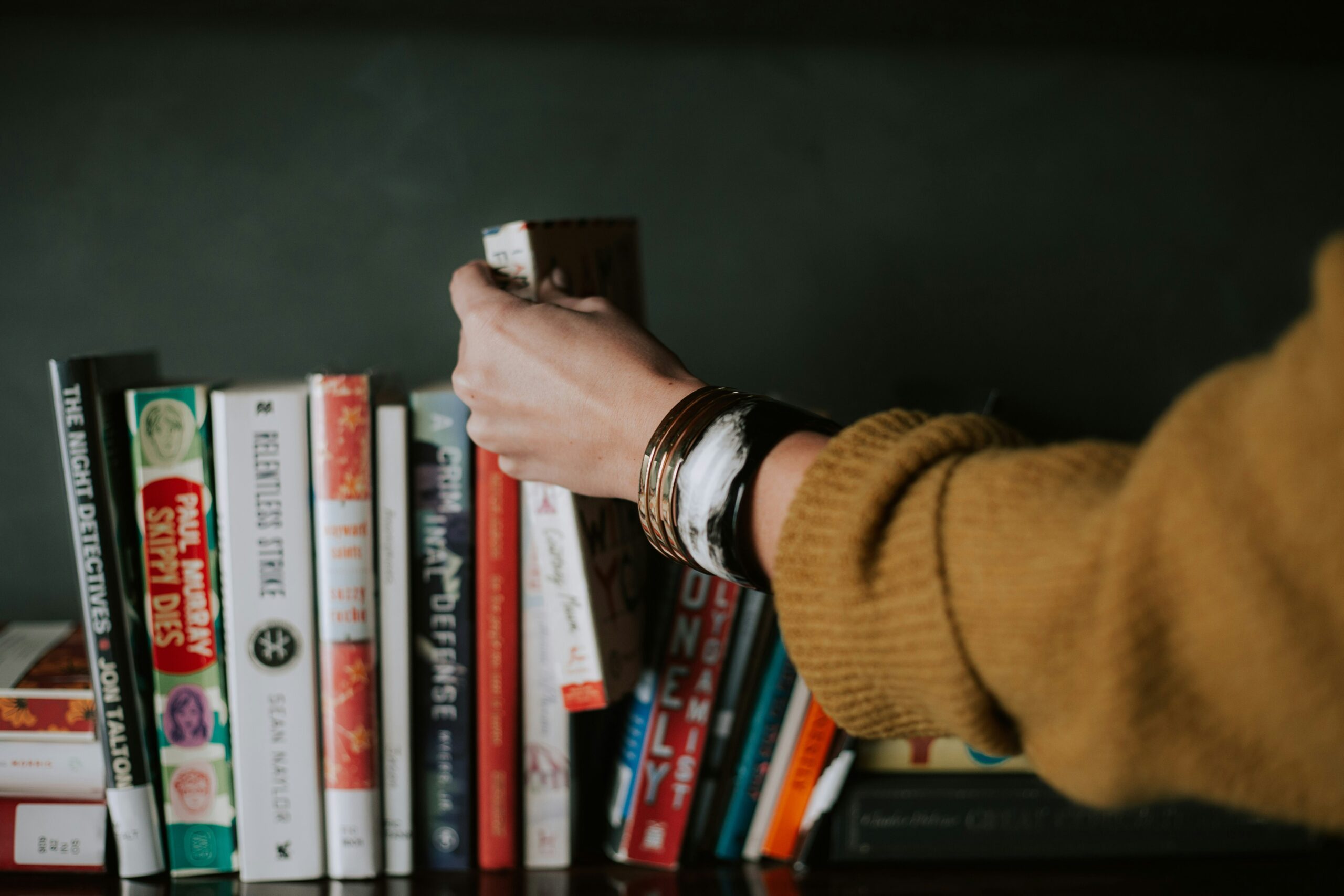
You bought the book — maybe O Alquimista, because everyone recommends it, or perhaps a children’s book because it seemed like a safer place to start — only to find yourself stopping every few lines to look up unfamiliar words, losing the thread of what you were reading, and eventually putting the book aside. Experiences like this can easily make you feel that your Portuguese is not good enough for reading, when the real problem may simply be that the text was not right for you at that stage.
Choosing what to read in another language is more complicated than it seems, and learners rarely get much guidance on how to judge whether a text suits their level, interests, and goals. So before looking at reading strategies, it makes sense to start with a more basic question: how do you choose the right text to read in Portuguese?
The problem of finding the right level of challenge
One of the biggest challenges is finding the middle ground between texts designed for learners and the kinds of books they actually want to read. Beginner materials are usually manageable, but they can stop being interesting fairly quickly, while novels, essays, journalism, and literary texts may be much more engaging but still too demanding in vocabulary, syntax, length, or cultural knowledge.
Many learners find themselves somewhere in between: ready for more than graded material, but not yet comfortable reading Jorge Amado without constantly interrupting themselves to look things up. What they need is not simply “an easier book,” but texts that hold their attention and challenge them enough to help them progress without making comprehension collapse. No single genre fills this gap. A useful text is one that fits your current level and also moves you toward the kind of reader you want to become.
There’s a second challenge: written and spoken Portuguese are not always the same
Reading authentic texts also exposes you to something language courses don’t always make explicit: written and spoken Brazilian Portuguese can differ considerably in vocabulary, grammar, and register.
Compare:
Nós fomos ao mercado. / A gente foi no mercado.
Eu o vi ontem. / Eu vi ele ontem.
Dê-me o livro. / Me dá o livro.
All of these forms belong to Brazilian Portuguese, but they do not appear equally often in every context. Some are associated more strongly with formal writing, while others are especially common in conversation. A novel, a newspaper article, an academic paper, and a WhatsApp message will therefore expose you to different kinds of Portuguese. This matters because reading is not only about understanding what a sentence means. It is also about learning to notice how language changes according to context, genre, and register. That is another reason why text selection matters.
One useful option: the Brazilian crônica and other short texts
One particularly useful genre for learners is the Brazilian crônica: a short text, often centered on an ordinary situation, such as a crowded bus, a family conversation, or something overheard at a café that turns everyday life into a brief story, reflection, or observation.
Because crônicas are relatively short and often conversational in tone, they can work especially well when carefully selected for a learner’s level. Their length makes it possible to read and work through a complete authentic text in one or two sittings, even when some of the language is challenging. That sense of completion matters: finishing a whole text can make reading feel more manageable and rewarding. Crônicas also often bring together everyday vocabulary, humor, cultural references, and familiar topics such as family, food, work, and city life.
Writers such as Luis Fernando Verissimo, Rubem Braga, Fernando Sabino, Antônio Prata, and Martha Medeiros offer many examples of the genre. Depending on your interests and goals, a short news feature, an interview, a personal essay, a review, or even part of an academic text may be more useful.
How you read matters as much as what you read
Finding the right text solves part of the problem. The rest depends on your approach. Instead of stopping at every unfamiliar word, read the text through once without a dictionary and focus on the main situation or argument: what is happening, who is involved, and what seems to be the main point? You will probably miss some details, but learning to tolerate those gaps is an important part of becoming a more fluent reader.
On the second reading, investigate what actually matters. Look up words or expressions that recur, seem particularly useful, or genuinely prevent you from understanding the text. When something is worth remembering, record the phrase or sentence around it rather than the isolated word, so that you can see how it works in context.
Then return to the text later, perhaps the next day. A further reading often feels noticeably easier and gives you a chance to notice things that were invisible the first time: recurring structures, connectors, verb forms, expressions, tone, or stylistic choices. You may also begin to recognize grammar you once studied in isolation working naturally inside sentences.
How do you know when a text is too difficult?
No exact percentage works for everyone, but there is a useful practical test. If unfamiliar vocabulary or sentence structure forces you to stop several times in every paragraph simply to understand what is happening, the text is probably too demanding for this kind of reading practice.
That does not mean you should never read it. It simply means that another text may be more productive right now. The same applies to crônicas. If one requires so much decoding that you can no longer follow the text as a whole, choose another one. The goal is not to avoid difficulty altogether, but to work with a level of difficulty that still allows comprehension.
The part that is difficult to do alone
You can do all of this independently: choose shorter authentic texts, read first for the general meaning, be selective with the dictionary, and return to the same text more than once. What is harder to do alone is judge what deserves your attention. You may understand the basic meaning of a sentence without realizing that you have interpreted an expression incorrectly. You may know every word but miss the irony. You may come across a form and assume that it is common in conversation when it belongs mostly to formal writing. Or you may simply overlook a construction that would be especially useful for your own Portuguese. That is where guided reading becomes valuable.
Reading with a teacher is about learning what to notice: where your interpretation went wrong, why the author chose a particular expression, how register affects the language, which phrases are worth remembering, and how the text connects to the Portuguese you want to understand and use.
The text itself can also change according to your goals. You might work with a crônica because you want more contact with everyday Brazilian language and culture, a journalistic text because you want to follow current events, literature because that is what motivates you, or academic writing because you need to read professionally or for research. There is no single right text for every learner.
The right text for you is out there — and we can help you find it!